


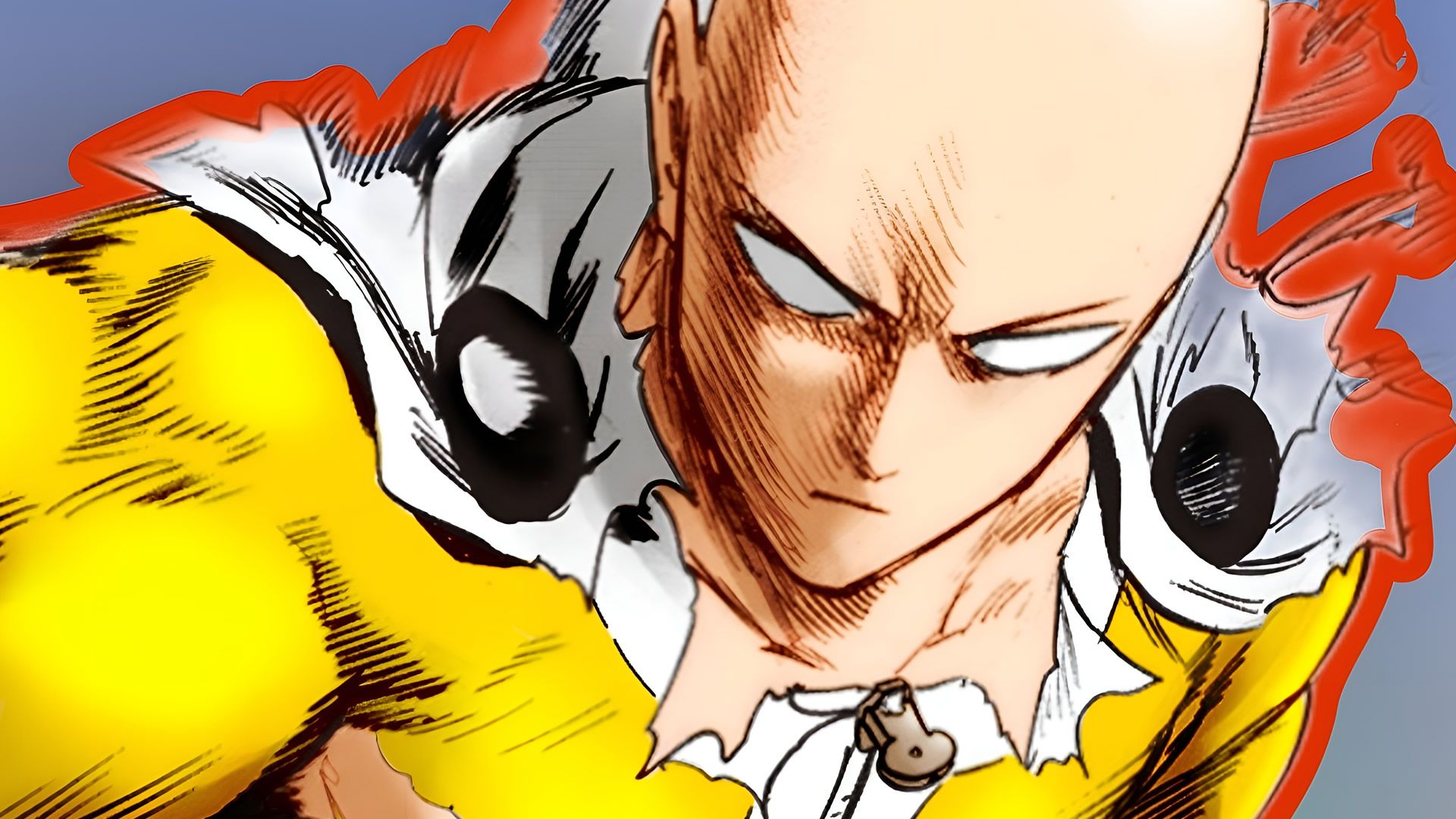
The overpowered protagonist represents one of anime’s most paradoxical storytelling challenges: how to maintain narrative tension and viewer engagement when the main character can defeat nearly any obstacle with overwhelming power. Yet the finest examples in this subgenre transcend the power fantasy formula by using invincibility not as an endpoint but as the foundation for deeper exploration of identity, purpose, morality, and what happens when traditional conflict becomes impossible. These are the anime that prove that compelling narratives require neither power balance nor traditional escalation—they require character depth and thematic sophistication.
The Philosophical Confrontation With Invincibility
One Punch Man stands as the definitive entry point for understanding how OP protagonists can sustain engaging narratives. Saitama achieved his dream—becoming the strongest hero—only to discover that invincibility breeds existential crisis rather than fulfillment. The series operates as both parody and genuine exploration: it mocks shonen genre conventions where increasingly powerful enemies demand increasingly stronger protagonists, while simultaneously delivering satisfying action sequences that justify its massive audience. The genius of One Punch Man is that Saitama’s boredom from absolute dominance becomes the emotional core, transforming combat from the narrative’s purpose into secondary entertainment. His relationships with Genos (a cyborg pupil seeking to strengthen himself) and the Hero Association provide genuine character stakes separate from fighting power. When Saitama finally encounters Boros, a regenerating galactic conqueror, the series showcases that even against a worthy opponent, Saitama holds back—making victory feel hollow rather than triumphant. The series proves that comedy, philosophical contemplation, and character connection can sustain engagement better than escalating power creep.
Mob Psycho 100 deconstructs the OP protagonist archetype more radically by featuring a character desperate not to use his overpowered psychic abilities. Shigeo Kageyama (Mob) possesses reality-breaking telekinetic power but consciously avoids utilizing it, instead pursuing mundane goals: getting a girlfriend, making friends, understanding emotions. The series inverts conventional power fantasy by showing that raw ability matters far less than emotional maturity and human connection. By prioritizing Mob’s spiritual growth over ability mastery, the series suggests that true strength emerges through vulnerability rather than dominance. Each climactic moment where Mob unleashes his powers represents not victory but loss of emotional control—something to overcome rather than celebrate. The slice-of-life segments, where Mob works as an assistant to a fake psychic, carry more narrative weight than the supernatural sequences.
Strategic Genius and Manipulation
Code Geass features protagonist Lelouch vi Britannia, whose “Geass” ability grants absolute obedience—any command, once issued, cannot be disobeyed. Where other OP protagonists use physical strength or magic, Lelouch weaponizes intellect and manipulation. The series functions as dark thriller exploring how power corrupts; Lelouch begins with liberation-focused goals but gradually transforms into a tyrannical despot despite—or because of—his overwhelming capability. The brilliance of Code Geass lies in using the OP protagonist concept to explore moral degradation: each victory increases Lelouch’s certainty that he alone can reshape the world according to his vision, incrementally justifying increasingly ruthless actions. By the final episodes, viewers confront the horror of recognizing that Lelouch’s absolute power has made him functionally insane, certain of his superiority while destroying everything he claimed to protect. Code Geass demonstrates that overpowered abilities can serve as narrative device to examine how unchecked power transforms moral reasoning.
Overlord features Ainz Ooal Gown, an undead sorcerer who accidentally becomes trapped in a virtual reality game where he wields absolutely broken magic. Unlike heroes seeking to use power responsibly, Ainz is unambiguously positioned as the villain—yet the series complicates this through his incompetence masquerading as genius. Ainz has no master plan; his “world conquest” emerges accidentally from well-intentioned actions misinterpreted by subordinates as deliberate strategy. The series finds dark comedy in watching increasingly powerful subordinates (who believe Ainz orchestrates everything) commit atrocities they assume serve his hidden agenda. Gradually, Ainz loses the ability to reveal his incompetence without destroying his subordinates’ faith—trapping him in a role he never intended. This narrative approach subverts OP protagonist expectations by making overwhelming power a burden rather than wish fulfillment, as Ainz becomes prisoner to the mythology others constructed around him.
Absolute Power and Existential Cost
Solo Leveling presents perhaps anime’s most sophisticated treatment of how power progression corrupts character. Sung Jin-woo transforms from E-rank (weakest hunter) to god-like entity through a unique leveling system uncapped by conventional limits. What distinguishes Solo Leveling is its refusal to celebrate this progression: as Jin-woo becomes stronger, the series explicitly shows him losing humanity. The narrative maintains tension not through external threats (Jin-woo inevitably surpasses them) but through psychological deterioration—Jin-woo becomes emotionally isolated, increasingly willing to sacrifice innocents for power. His Shadow Army, assembled from defeated enemies, represents both his dominance and dehumanization. Critically, power creep in Solo Leveling isn’t presented as problem-solving but as problem-generating: Jin-woo’s strength isolates him from meaningful relationships and makes his original motivation (protecting family) increasingly irrelevant. The series asks uncomfortable questions: if you achieve overwhelming power at the cost of your humanity, have you actually won? By demonstrating that power inevitably scales beyond its original purpose, Solo Leveling becomes tragedy masquerading as victory fantasy.
The Eminence in Shadow operates on completely different principles—as dark comedy where the protagonist’s delusion sustains the narrative. Cid Kagenou, reincarnated with godlike magic, dreams of orchestrating events from shadows like an anime villain. Yet Cid remains convinced his elaborate plans are mere cosplay while his fabricated demon cult (Shadow Garden) becomes genuinely real and genuinely powerful. The series finds humor in the disconnect: other characters witness Cid’s screen-rattling finishers leveling city blocks and interpret them as calculated strategy, while Cid genuinely believes it’s all imagination. This creates meta-commentary on power fantasy—the series simultaneously ridicules and indulges in OP protagonist wish fulfillment, allowing viewers to enjoy spectacle while the narrative winks at audience expectations. After two seasons, Cid remains fundamentally unchanged and unlearned, suggesting that the joke sustains engagement more effectively than character development.
Alternative Power Systems
The Misfit of Demon King Academy embraces overpowered dominance without apology: Anos Voldigoad is the demon king reincarnated, already at absolute peak power from the series’ beginning. Where other OP protagonists gradually accumulate strength, Anos simply is—making the narrative focus shift entirely to world-building and comedic school interactions rather than power progression. The series proves that engaging storytelling needn’t require threat or struggle; it requires character charisma and interesting secondary cast dynamics. Anos casually defeats every challenge while pursuing school romance, attending clubs, and navigating institutional politics. The comedy emerges not from power escalation but from how casually an absolute deity treats mundane adolescent experiences.
Sword Art Online pioneered the isekai OP protagonist template by featuring Kirito, who rapidly becomes overpowered through gaming mechanics mastery rather than explicit power-granting abilities. The series remains influential because it treated game-breaking ability through strategic intelligence lens—Kirito’s power derives from exploiting systems and adapting to threats rather than simple stat accumulation. While its romance elements and harem dynamics generate contemporary criticism, SAO’s core appeal remains valid: showing how intellectual mastery of complex systems produces capability that transcends raw combat ability.
Power as Parody and Absurdity
My Instant Death Ability represents the extreme endpoint of OP protagonist parody—protagonist Yogiri possesses the ability to instantly kill anything, making conventional conflict literally impossible. The series commits fully to absurdity, deliberately removing conventional sources of tension and instead finding humor in how ridiculously broken a single power becomes. By pushing overpoweredness to logical extreme, the series deconstructs the trope itself.
Arifureta: From Commonplace to World’s Strongest subverts the template through earned progression: Hajime begins weak, abandoned, and facing death, then gradually becomes powerful through intelligence, crafting, and adaptation. The series emphasizes that ingenuity and strategic thinking matter more than raw stats, allowing viewers to appreciate power progression as consequence of intelligent problem-solving rather than arbitrary game mechanics.
Contemporary Emergent Titles
The Eminence in Shadow Season 2 and emerging 2025 releases maintain momentum in the OP MC subgenre, with series like Shangri-La Frontier and ongoing adaptations expanding thematic territory. Recent anime demonstrate that audiences remain engaged with overpowered protagonists when production quality, character dynamics, and narrative sophistication remain strong.
Viewing Strategy by Preference
For Power Fantasy Wish Fulfillment: One Punch Man and The Misfit of Demon King Academy deliver unambiguous spectacle without requiring character suffering or moral contemplation.
For Philosophical Examination: Solo Leveling and Code Geass use OP protagonists to explore corruption, identity loss, and moral degradation alongside action sequences.
For Comedic Subversion: The Eminence in Shadow and Overlord parody OP tropes while simultaneously indulging them, creating meta-entertainment that works on multiple interpretive levels.
For Slice-of-Life Integration: Mob Psycho 100 proves that overpowered characters can sustain engagement through character-driven storytelling when power itself becomes secondary to emotional growth.
For Strategic Intellect Focus: Code Geass and Sword Art Online appeal to viewers who appreciate how cunning and system mastery produce dominance independent of raw power.
The most compelling OP protagonist anime recognize that invincibility isn’t narrative weakness—it’s opportunity to explore questions power fantasy rarely addresses: What makes life meaningful when obstacles disappear? How does dominance isolate rather than fulfill? What happens when strategic genius misinterprets feedback and becomes tyrannical? Whether through existential philosophy, dark comedy, or genuine character depth, the best entries in this subgenre demonstrate that exceptional storytelling transcends power scaling entirely.